
Monsoon Roof Leak: What to Do During and After the Storm
A monsoon cell can drop an inch or more of rain on Chandler in under an hour, and a roof that has been fine all year can suddenly leak through a ceiling. If water is dripping now, the steps are simple: protect people and electrical, catch and drain the water, get the roof covered, and start drying the ceiling before it sags or grows mold.
This guide covers what to do during and after a monsoon roof leak, why East Valley roofs fail in storms, and how insurance treats a roof leak differently from flooding.
Right now: during the storm
- Turn off power to the room if water is near a light fixture, ceiling fan or outlet. Don't touch wet switches.
- Catch the water. Buckets, totes and towels. Move furniture, electronics and rugs out of the drip zone.
- Watch for a bulge. A ceiling that sags or balloons is holding water. Keep everyone out from under it. Turn off power to that room and leave draining it to the restoration crew; a saturated ceiling can come down without warning.
- Don't go on the roof. Wet tile is slick, and monsoon storms bring lightning and strong winds. Wait until the storm passes and leave it to a roofer.
- Take photos and video of the drip, the ceiling, and anything that got wet.
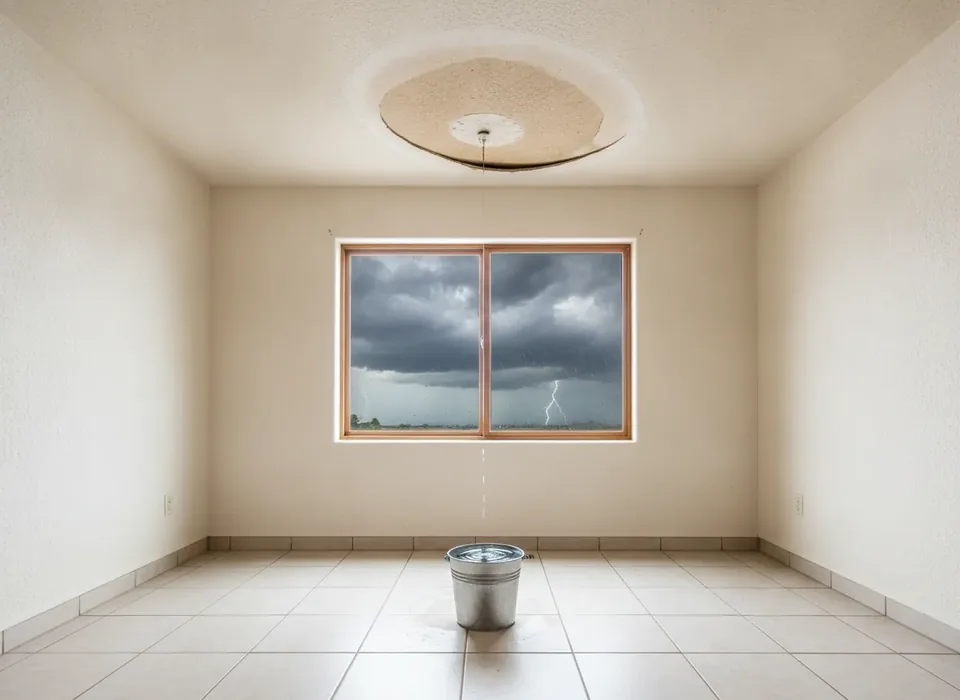
After the storm: the first day
Get the roof covered
Call a roofer for emergency tarping or a temporary patch. Arizona's DIFI advises making temporary repairs to prevent more damage and keeping the receipts. Hold off on permanent roof work until your insurer has had a chance to inspect.
Get the ceiling and attic assessed
Ceiling leaks nearly always involve wet insulation, which holds water like a sponge. A restoration company can check moisture in the drywall, insulation and framing, remove what can't be saved, and dry the rest.
Call your insurer
Report the leak, get a claim number, and share your photos. Ask what the policy says about roof damage and resulting interior damage.
Keep drying
Run the AC. Monsoon humidity in metro Phoenix can sit around 50–70% during storms, which slows natural drying. Don't assume a stain that looks dry is dry above.
Why roofs leak during the monsoon in the East Valley
The National Weather Service defines the Phoenix-area monsoon as June 15 through September 30, and the season delivers a big share of the year's rain in short, intense bursts. The East Valley has seen several: a July 2022 storm brought roughly 60 mph winds and flooded streets in Chandler, Gilbert and Queen Creek, and the remnants of tropical storms in October 2025 brought record moisture and 3.02 inches to Sky Harbor over several days.
The weak points tend to be the same:
- Tile roof underlayment. Concrete and clay tile shed most rain, but the underlayment beneath does the waterproofing. In Arizona it lasts roughly 8 to 20 years, per Rosie on the House. One cracked or slipped tile can let storm water reach worn underlayment. Replacing it means lifting the tiles, replacing the underlayment, and relaying them.
- Flat roofs and parapets. Ponding water, clogged roof drains or scuppers, and cracked seams at parapet walls are common sources of leaks on flat sections.
- Roof penetrations. Vent pipes, skylights and evaporative cooler or AC roof jacks rely on seals that crack in the heat. A failed cooler float valve can also overflow onto the roof; our AC and evaporative cooler leaks page covers those.
- Wind-driven rain. Strong outflow winds push rain sideways under tiles and through gaps that never leak in a normal shower.
Roof leak vs. flood: why it matters for insurance
This is the distinction to understand before you call your insurer. Homeowners policies generally treat water coming down through a storm-damaged roof differently from water coming in at ground level.
- Roof leak from storm damage (wind lifts tiles, a branch punctures the roof): the resulting interior water damage is often covered as a sudden loss. The roof repair itself may or may not be, depending on cause.
- Roof leak from wear (old underlayment, long-failed flashing): often treated as maintenance, which can limit coverage.
- Flood, or rising water (yard runoff, street flooding, a retention basin overflowing into the house): generally excluded from homeowners policies. That needs a separate flood policy, such as one through the National Flood Insurance Program. The City of Chandler notes that most homeowners policies don't cover flood, and that several small areas near canal banks and rail embankments sit in the 100-year floodplain.
Your policy's deductible applies either way. If a claim stalls, Arizona rule R20-6-801 requires an insurer to acknowledge a claim within 10 working days and accept or deny within 15 working days of a proof of loss. DIFI Consumer Services is at (602) 364-2499. This is general information; ask your adjuster or an Arizona attorney about your situation.
HOA homes: tarp first, then ask. In many East Valley planned communities, roof and exterior changes need architectural review. Emergency tarping and interior drying shouldn't wait. For the permanent repair, submit a like-for-like replacement (same tile, color and profile) to your HOA's design review. Under A.R.S. §33-1817, an association may not unreasonably withhold approval and must state its reasons.
What a ceiling leak costs to fix
Ceiling repair after a leak typically runs $325–$1,100, per Fixr. If water spread into walls and flooring, the overall restoration job more often lands in the $1,200–$5,000 range, and mold remediation adds $1,500–$4,000 if it has started. These are typical ranges from national cost guides (Fixr 2025, HomeAdvisor 2025); East Valley quotes vary. The roofing repair is a separate bill from a roofer. See the Chandler water damage cost guide for more.
Before the next storm
- Have a roofer inspect tile roofs yearly, especially if the underlayment is more than 15 years old.
- Clear roof drains, scuppers and gutters before mid-June.
- Check seals around vents, skylights and cooler or AC roof jacks.
- Trim branches over the roof.
- Find your attic access and know where to set a bucket.
- Read your policy's water and flood sections, and price a flood policy if you're near a canal or wash.
Get help with the inside
A roofer stops the water; a restoration company dries and repairs the ceiling, insulation and anything below. Chandler Water Damage Pros connects you with independent, ROC-licensed restoration companies across Chandler and the East Valley. Read more on our monsoon roof leak and ceiling damage page, or request free quotes.
Frequently asked questions
What should I do if my roof is leaking during a monsoon?
Turn off power to the room if water is near fixtures or outlets, catch the drip in buckets, and move belongings out of the way. Keep people out from under any sagging ceiling. Don't go on the roof during the storm. Afterward, call a roofer for emergency tarping, a restoration company for the wet ceiling and insulation, and your insurer.
Does homeowners insurance cover monsoon roof leaks in Arizona?
Interior water damage from a sudden, storm-caused roof leak is often covered, subject to your deductible. Leaks from worn-out underlayment or long-failed flashing may be treated as maintenance. Water that floods in at ground level is generally excluded and needs a separate flood policy. Ask your adjuster how your policy applies.
Can I fix my roof before my HOA approves it?
Emergency tarping and interior drying to prevent more damage generally shouldn't wait. For the permanent repair, many East Valley HOAs require architectural review, so submit a like-for-like replacement for approval. Arizona law says planned-community associations may not unreasonably withhold approval and must state their reasons. Check your HOA's rules.
Will a wet ceiling dry on its own in Arizona?
The drywall surface may look dry within days, but insulation and framing above it can hold water much longer, especially during humid monsoon weather. Trapped moisture can lead to stains, sagging and mold. Have a restoration company check moisture levels above the ceiling before it is painted or patched.