
Structural Drying & Dehumidification in Chandler, AZ
Getting the water off the floor is the first step. Getting it out of the slab, the walls and the cabinets is structural drying. Here's how it works in Chandler, and how to get free quotes from independent restoration companies.
Get a Free Quote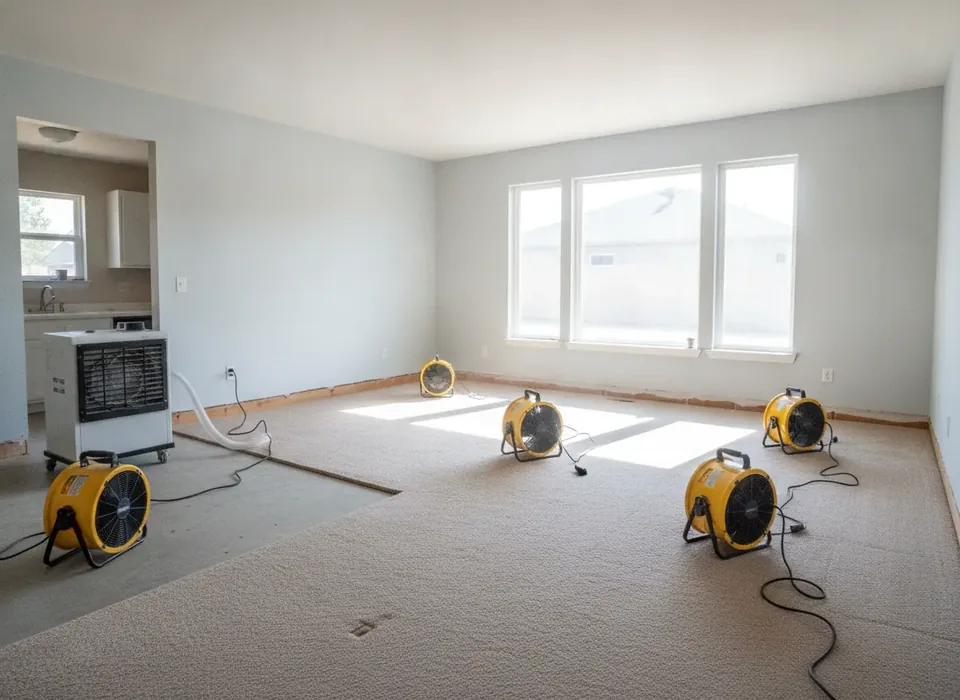
What happens first
Structural drying starts once standing water is gone and the source is fixed. The restoration company measures moisture in floors, walls and cabinets, picks a dry reference spot in an unaffected part of the house, and sets a goal: wet materials are done when they read like that reference.
The house will be loud and warm for a few days. Air movers blow across wet surfaces, dehumidifiers pull the moisture out of the air, and someone comes back regularly to take readings. If you're still deciding who to hire, call Call (727) 300-6656 or use the form, and say whether extraction has already been done.
Classes of loss and what they typically cost
The industry groups drying jobs by how much water soaked in and into what. The class shapes the equipment count, the time and the price.
| Class | What it usually means | Typical range |
|---|---|---|
| Class 1 | Small area, little absorbed; mostly hard floors | $150–$400 |
| Class 2 | A whole room; carpet and pad wet, water wicking up walls | $500–$1,000 |
| Class 3 | Water from above; ceilings, walls, insulation and floors saturated | $1,000–$3,000 |
| Class 4 | Deep saturation of dense materials such as concrete, hardwood or plaster | $20,000+ |
Typical ranges from national cost guides (Fixr 2025, HomeAdvisor 2025); East Valley quotes vary. Drying is usually one part of a larger bill that may include extraction, tear-out and rebuild. The Chandler cost guide puts the pieces together.
How the restoration companies dry a structure
The aim is to dry materials in place where possible, and remove only what can't be saved.
Moisture mapping
Pin and pinless meters, often with a thermal camera, map wet areas room by room. The map shows where equipment goes.
Open up trapped water
Baseboards come off, small holes may be drilled behind them, and wet insulation or carpet pad is removed so air can reach the water.
Set air movers and dehumidifiers
Air movers push dry air across wet surfaces. Dehumidifiers pull that moisture out of the room. Specialty systems can push air into wall cavities or under cabinets.
Monitor daily
Readings are taken and logged, and equipment is moved as areas dry. Your adjuster will likely ask for this log.
Confirm the dry standard
When readings match the dry reference, equipment comes out and the rebuild can be scheduled with an ROC-licensed contractor.
Drying in the desert: faster, until it isn't
Chandler's dry air is a real advantage. For much of the year, the air coming into the house is already very dry, so dehumidifiers have less work to do and wet drywall gives up water quickly.
Two things work against that. First, monsoon season (June 15 to September 30) brings stretches of much higher humidity, which local restoration contractors put around 50–70%, and drying slows. Second, the dry air makes surfaces feel dry long before the material inside is. A carpet that seems dry by evening can sit on a wet pad over a wet slab. Readings, not touch, decide when drying is done.
Concrete is the slow part. Most Chandler homes are single-story on slab, and water that got under tile or carpet, especially from a slab leak, can take longer to dry than the walls above it.
Drying alongside your AC
In summer you'll keep the air conditioning running, and that's normal. AC removes some moisture and keeps the house livable while equipment adds heat. The restoration company may ask you to set the thermostat to a certain range, or to keep doors to drying rooms closed so the dehumidifiers work on a smaller space. Ask before you change the setup, and ask how to handle the extra power draw if several machines share a circuit.
How long structural drying takes
A clean-water loss caught quickly and limited to walls and tile often dries in a few days. Wet slabs, cabinets, hardwood and Class 3 or 4 losses take longer. Drying usually takes longer during monsoon humidity. The full picture is in how long water damage drying takes in Arizona.
Insurance and documentation
Drying is mitigation, the step DIFI expects homeowners to take to prevent further damage. Insurers and contractors usually price it by line items in estimating software, so ask for an itemized estimate and copies of the daily moisture logs and photos. Your policy's deductible still applies. If a drying company asks you to sign an assignment-of-benefits form, read it carefully before signing.
When drying can't wait
Start drying the same day if water reached drywall, cabinets or carpet pad, if the loss came from above through a ceiling, or if the house will be empty. Mold can begin in 24–48 hours on wet materials; see mold after water damage. For water still on the floor, start with emergency extraction.
Structural drying FAQ
Can I turn the drying equipment off at night?
Ask the company first. Drying works because the machines run continuously; turning them off lets moisture creep back into materials and can add days to the job. If noise is a problem in a bedroom, ask whether equipment can be repositioned or whether you can sleep in another room for a few nights.
How do I know the house is really dry?
Ask for the moisture log. A proper job records readings from the same spots each day and compares them to a dry reference area in your home. When wet materials match that reference, they're dry. A surface that feels dry, especially in Arizona's low humidity, isn't proof that the drywall core or slab is dry.
Why did they cut my drywall if it can be dried?
Drywall can often be dried in place when the water was clean and caught quickly. It's usually cut when the water was gray or black, when insulation inside the wall is soaked, when the wall faces a cabinet or tile that traps water, or when it's soft or crumbling. Ask the technician to explain each cut.
Does the AC help or hurt drying?
In most cases it helps. Running the AC keeps the house cooler and removes some moisture, which supports the dehumidifiers. The restoration company may suggest a thermostat range or closed doors so drying rooms stay controlled. Ask before you change settings, and keep the AC filter clean, since drying can stir up dust.
Get free quotes for structural drying
Say what got wet, whether extraction is done and how long ago it happened. Independent East Valley restoration companies reply with no-obligation quotes.
Water where it shouldn't be? Get free quotes.
Tell us what happened and independent East Valley restoration companies can reply with no-obligation quotes.