
Does Homeowners Insurance Cover Slab Leaks in Arizona?
Short answer: a typical Arizona homeowners policy often pays for the water damage a slab leak causes, and sometimes for the cost of breaking into the slab to reach the pipe, but it usually does not pay to fix the leaking pipe itself. And if the insurer decides the leak had been seeping for a long time, the whole claim can be denied as gradual damage.
Whether a slab leak is covered by insurance comes down to three questions: was the damage sudden and accidental, what does your policy say about "access" or tear-out, and how quickly did you report it. This guide walks through each one for Chandler and East Valley homeowners. It is general information, not legal advice. Your policy wording decides your claim, so read it and ask your adjuster.
What a slab leak claim is really made of
A slab leak is a break in a water line that runs in or under the concrete slab your house sits on. Slab-on-grade construction is the norm in Valley tract homes, per local plumbers, so most leaks here happen under tile or carpet rather than in a basement or crawl space. A claim usually has three separate parts, and policies treat them differently:
The pipe repair
Finding and fixing the broken line. This is plumber work. Most policies treat the failed pipe as a maintenance item and do not pay to repair or replace it.
Access to the pipe
Breaking up tile and concrete so the plumber can reach the leak, then patching the slab. Many policies include some "tear-out" or access coverage for a covered water loss. Some cap it; some exclude it.
The resulting water damage
Wet flooring, baseboards, drywall and cabinets, plus extraction and drying. This is the part most often covered when the loss is sudden and accidental, and it is the restoration company's part of the job.
Knowing that split helps you read a claim decision. An insurer can pay for new flooring and drying while declining the plumbing bill, and both decisions can be consistent with the same policy.
Sudden and accidental vs. gradual seepage
This is where most slab leak claims are won or lost. Homeowners policies generally cover water that escapes suddenly and accidentally from a plumbing system. They generally exclude damage from water that leaked or seeped slowly over weeks or months.
A slab leak sits awkwardly between the two. The pipe may fail all at once, but the water can stay hidden under the slab for a long time before anything shows. The insurer's adjuster will look for signs of age: wide staining, rotted tack strip, mold growth, a long run of high water bills, or a warm spot you mentioned months ago. Evidence like that is often used to call the loss gradual.
What helps you is speed. Report the leak as soon as you notice a sign of one, and keep a record of when you first noticed. Our guide to the signs of a slab leak covers what to watch for so you catch it early.
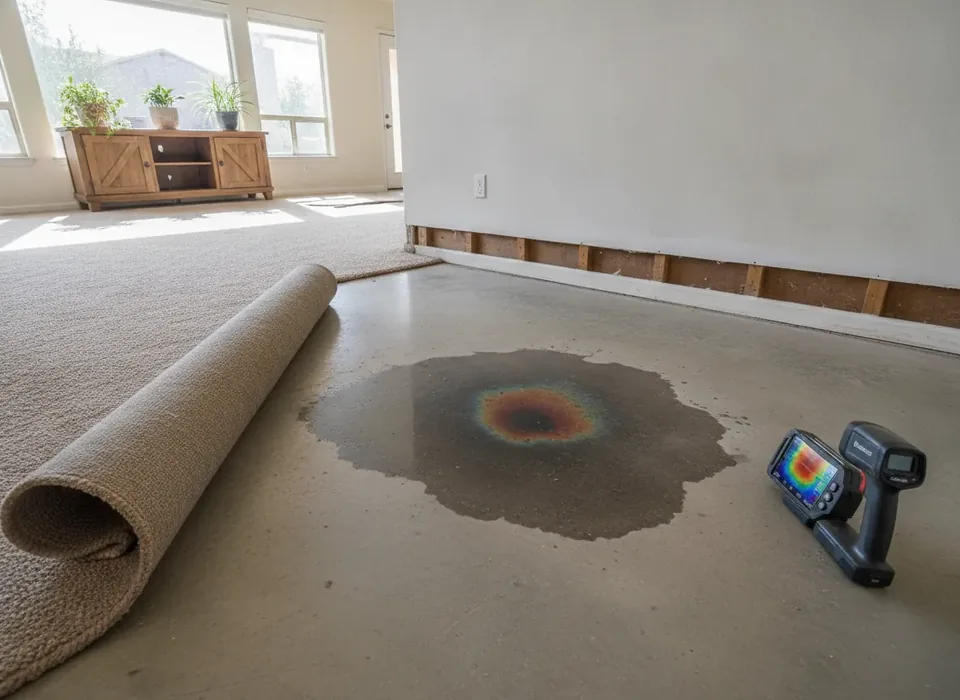
What Arizona rules say about how your claim is handled
Arizona doesn't dictate what your policy covers, but it does set rules for how an insurer handles the claim once you file:
- Timelines. Under Arizona Administrative Code R20-6-801, an insurer must acknowledge your claim within 10 working days and accept or deny it within 15 working days of receiving a properly executed proof of loss, or tell you why it needs more time.
- Fair handling. A.R.S. §20-461 bars insurers, as a general business practice, from misrepresenting coverage, ignoring claim communications or refusing to pay without a reasonable investigation.
- Complaints. If a claim stalls, the Arizona Department of Insurance and Financial Institutions (DIFI) Consumer Services line is (602) 364-2499. Its consumer insurance page explains how to file a complaint.
- Assignment of benefits. A.R.S. §20-461(A)(7) protects your right to assign a claim after a loss. Some contractors will ask you to sign an assignment-of-benefits form. Read any assignment-of-benefits form carefully before signing, and ask your adjuster or an Arizona attorney if you're unsure what it gives away.
Before you file: a quick checklist
- Find your declarations page and look for "water damage", "tear out", "access" and any slab or underground-pipe endorsement.
- Note your policy's deductible. If the visible damage is small, compare it to the deductible before deciding how to proceed.
- Photograph every wet area, the meter, and recent water bills.
- Keep the plumber's written leak-detection report. It often states where the break was and what kind of failure it was.
- Make temporary repairs to stop further damage and keep the receipts. DIFI advises not making permanent repairs before the insurer has inspected.
Is the plumber's bill covered?
Usually not the pipe itself. That said, check for an endorsement. Some insurers sell an add-on for service lines or underground plumbing, and some policies list "slab leak" coverage with a dollar limit. If you have one, it changes the math on a reroute or repipe.
Leak detection is the first bill most owners see. Plumbers typically charge $100–$400 to locate a slab leak, and the plumbing repair itself averages around $2,500, with a typical range of $1,000–$4,000. Rerouting or replacing under-slab lines runs $4,000–$15,000. Those are national figures from Fixr; the full breakdown, including restoration on top, is in our slab leak repair cost guide.
Is the flooring and drying covered?
Often, when the leak qualifies as sudden. This is the restoration side of the job: pulling wet carpet and pad, removing baseboards, cutting wet drywall, drying the slab and wall cavities, and rebuilding. On a slab, the concrete itself holds water, so drying can take longer than people expect. The slab leak water damage page explains how the plumber and the restoration company split the work.
Two practical points. First, insurers and restoration companies price these jobs by line item, so ask for an itemized estimate you can hand to your adjuster. Second, tear-out and rebuild is contracting work in Arizona. Check any company at the Arizona Registrar of Contractors and look for "ROC" plus a license number on its bid, as A.R.S. §32-1124 requires.
Common reasons slab leak claims get denied
- Long-term leakage. The adjuster concludes water had been escaping for weeks or months.
- Wear and tear. The pipe failure itself is treated as maintenance, not a covered loss.
- Foundation movement. Settling or cracking of the slab is often excluded, even when water played a part.
- Mold limits. Many policies cap or exclude mold, especially when it suggests a slow leak.
- Late notice. Waiting to report can make it harder to show the damage was sudden.
If you think a denial is wrong, ask the insurer to put its reasons in writing and point to the policy language it relied on. You can then talk to an Arizona attorney or a licensed public adjuster, or file a complaint with DIFI.
What to do today if you suspect a slab leak
Shut off the main if water is visibly coming up or the meter is spinning with everything off. Call a licensed plumber for leak detection. Call your insurer to open the claim. Then get the wet flooring looked at by a restoration company before the slab sits wet for days. Chandler Water Damage Pros connects you with independent, ROC-licensed restoration companies in Chandler, Gilbert, Mesa and the rest of the East Valley; request free quotes and compare.
Frequently asked questions
Is a slab leak covered by homeowners insurance in Arizona?
Often partly. Many Arizona homeowners policies cover the sudden, accidental water damage a slab leak causes, and some cover the cost of breaking into the slab to reach the pipe. Most do not pay to repair the leaking pipe itself, and damage from slow, long-term seepage is usually excluded. Your policy wording decides it, so ask your adjuster.
Does insurance pay to reroute or repipe after a slab leak?
Usually not under the base policy, because the pipe is treated as a maintenance item. Some insurers sell endorsements for underground plumbing or service lines that may help. Check your declarations page for one before you choose between a spot repair, a reroute or a repipe, since the cost difference is large.
How long does an Arizona insurer have to respond to my claim?
Under Arizona rule R20-6-801, insurers must acknowledge a claim within 10 working days and accept or deny it within 15 working days after receiving a properly executed proof of loss, or explain why they need more time. If a claim stalls, DIFI Consumer Services can be reached at (602) 364-2499.
Should I sign an assignment of benefits for a slab leak job?
Arizona law protects your right to assign a claim after a loss, but the form can hand a contractor control over the claim and payment. Read any assignment-of-benefits form carefully before signing, ask what it covers and how disputes are handled, and talk to your adjuster or an Arizona attorney if anything is unclear.