
Signs of a Slab Leak: 9 Symptoms Chandler Homeowners Should Check
A slab leak rarely announces itself with a puddle. The water is escaping from a line in or under your concrete floor, so the first signs are usually small and easy to explain away: a water bill that creeps up, a patch of tile that feels warm, a faint sound of running water at night.
Catching it early matters. The longer water sits under a slab, the more flooring, baseboard and drywall it reaches, and the harder it is to show your insurer the damage was sudden. Here are the slab leak symptoms East Valley plumbers and restoration companies see most, how to test for one in ten minutes, and who to call.
The most common signs of a slab leak
- A higher water bill with no change in use. A jump of a few dollars a month, month after month, is one of the earliest clues. Compare the same month last year, since summer irrigation skews the numbers.
- Running water sound with everything off. A hiss or trickle in a wall or under the floor when no tap, toilet or irrigation is on.
- A warm spot on the floor. A patch of tile or carpet that feels warmer than the rest usually points to a leaking hot-water line.
- Damp or discolored flooring. Carpet that feels damp along a wall, grout that stays dark, or wood or laminate that cups or lifts.
- Cracked or loose tile. New hairline cracks or hollow-sounding tiles in an area that was fine before.
- Musty smell or mildew. Especially at baseboards or behind furniture on an outside wall.
- Low water pressure. A sudden drop at several fixtures can mean water is escaping before it gets there.
- The water heater runs constantly. If hot water is leaking under the slab, the heater keeps refilling and reheating.
- Water at the edge of the slab. Damp soil or pooling along the foundation outside, or water seeping at the edge of the garage floor.
One sign on its own can have another cause. Two or three together, especially a warm floor plus a rising bill, is a strong reason to call a plumber for leak detection.
What does a slab leak look like?
From above, often like nothing at all at first. When it does show, a slab leak usually looks like a damp ring in carpet that keeps coming back, a dark band along the bottom of drywall, baseboard paint that bubbles, or grout lines that never dry after mopping. Under pulled-back carpet you may see a wet patch on the concrete that spreads outward from one spot.
A slab leak can also show up as a cracked tile with a damp seam beneath it, or water pushing up through a crack in the floor in a more serious break.
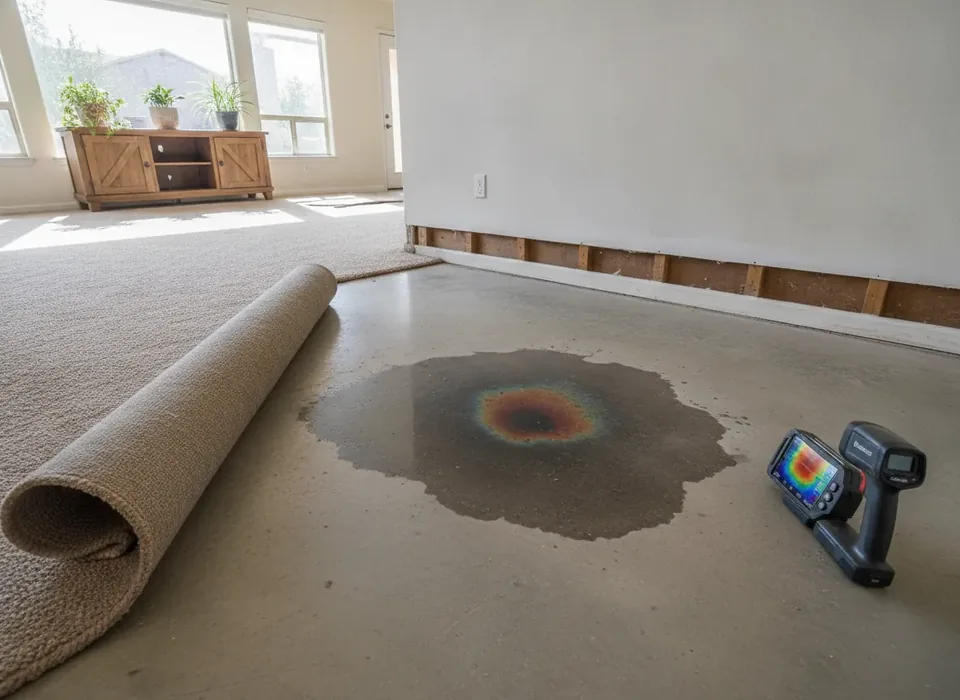
The warm floor test
Walk the house barefoot early in the morning, before the AC and sun have warmed the floors. Pay attention to the path between the water heater and the kitchen and bathrooms, since hot lines often run that way. A spot that feels noticeably warmer than tile a few feet away is worth marking with tape.
A warm floor only points to hot-water leaks. A cold-line leak won't feel warm, which is why the meter test below matters.
How to check your water meter for a leak
Turn everything off
Shut every faucet, the dishwasher, washer, ice maker and irrigation controller. Make sure no toilet is refilling.
Read the meter
Find your meter box, usually near the street or sidewalk. Look at the small leak indicator (often a triangle or star) and note the reading.
Wait and recheck
If the leak indicator is turning with everything off, water is going somewhere. Wait 30 minutes without using water and compare readings.
Narrow it down
Close the main shutoff at the house. If the meter stops, the leak is inside the house or under the slab. If it keeps moving, the leak may be in the line between the meter and the house.
A running toilet flapper is the most common false alarm. Put a few drops of food coloring in each tank; if color shows in the bowl within 15 minutes without flushing, that's your leak.
Slab leak in the garage
The garage is a common place to spot a slab leak first, because there's no flooring to hide it. Watch for a damp patch on the concrete that doesn't dry, efflorescence (white, chalky mineral deposits) spreading from a crack, or water at the base of the wall shared with the house. The water heater often lives in the garage in Chandler homes, so rule it out first: check the drain valve, the relief valve line and the base of the tank. Our burst pipe and water heater leaks page covers those failures.
Why slab leaks are common in the East Valley
Plumbers in the Valley point to a few repeat causes: hard water, heat, and soil movement. Chandler's water averages about 16.5 grains per gallon, per the City of Chandler, which is in the "very hard" range. Scale and the constant expansion and contraction of copper lines in the heat are commonly cited by local plumbers, along with lines rubbing against concrete. Chandler's housing is also aging into the window when lines fail: about 73% of homes were built between 1980 and 2009, per Census data.
If you see water coming up through the floor: shut the main valve, turn off power to any room where water is near outlets, photograph everything, and call a licensed plumber for leak detection. Then get the wet flooring evaluated. The slab and anything on it can keep wicking water for days.
Who to call: plumber first, then restoration
A slab leak is two jobs. A licensed plumber finds the leak, typically with acoustic or thermal equipment and pressure tests, and repairs it by spot repair, reroute or repipe. A restoration company handles what the water left behind: removing wet carpet and pad, baseboards and drywall, then drying the slab and walls with dehumidifiers and air movers and documenting moisture readings for your insurer.
Detection typically runs $100–$400 and the plumbing repair averages around $2,500, per Fixr's national figures; see the slab leak repair cost guide for the full picture. Coverage questions are covered in does homeowners insurance cover slab leaks in Arizona.
Chandler Water Damage Pros connects Chandler and East Valley homeowners with independent restoration companies for the drying and flooring side. Read more on our slab leak water damage page or request free quotes.
Frequently asked questions
What are the first signs of a slab leak?
The earliest signs are usually a water bill that rises without a change in use, a sound of running water when everything is off, and a warm spot on tile or carpet. Damp carpet along a wall, cracked tile and a musty smell tend to follow. A leak indicator on the water meter that moves with everything off is the clearest early test.
Does a warm floor always mean a slab leak?
Not always. Sun through a window, a heating duct under the floor or a nearby appliance can warm a spot. But a warm patch that stays warm in the early morning, especially between the water heater and a bathroom or kitchen, often points to a leaking hot-water line. Have a plumber confirm it with leak detection equipment.
Can I see a slab leak in my garage?
Often you can, because there is no flooring covering the concrete. Look for a damp patch that never dries, white chalky deposits spreading from a crack, or water at the base of the wall shared with the house. Rule out the water heater first by checking its drain valve, relief line and tank base.
How fast should I act on slab leak symptoms?
Within a day or two. Water under a slab keeps spreading into flooring, baseboards and drywall, and mold can start growing within roughly 24 to 48 hours in wet materials. Acting quickly also helps show an insurer that the damage was sudden. Call a plumber for detection, then have the wet areas assessed.