
The First 24 Hours After Water Damage: An Hour-by-Hour Checklist
The first day after a leak decides how big the job gets. Water that's extracted and dried within hours often means a few days of fans. Water left for a weekend often means cut drywall, new flooring and, sometimes, mold. You don't need to fix anything yourself today. You need to stop the water, stay safe, document it, and get the right people moving.
Here's a plain checklist for Chandler and East Valley homeowners, hour by hour.
Hour 0: stop the water and stay safe
- Shut the main. In many Chandler homes the main shutoff is usually near the front hose bib or in the garage. Turn it clockwise until it stops. If the leak is from one fixture, its own shutoff valve may be enough.
- Kill power to wet rooms. Flip the breakers for any room where water is near outlets, cords or appliances. If you'd have to stand in water to reach the panel, don't. Call the utility or an electrician.
- Watch the ceiling. A sagging, bulging ceiling can come down. Keep people and pets out from under it.
- Water heater leak? Shut its cold-water inlet valve and turn off the gas or the breaker for the heater.
- Sewage? If the water came from a toilet, drain or sewer line, treat it as contaminated. Keep children and pets away, and see our sewage backup cleanup page.
Hour 1: photograph everything
Before you move a thing, take a slow video walk-through of every wet room, then still photos. Your insurer will want them, and so will the contractors quoting the job.
- The source: the burst line, the failed supply hose, the water heater, the ceiling stain.
- Wide shots of each room, plus close-ups of wet flooring, baseboards and the waterline on walls.
- Damaged belongings, with model numbers where you can.
- Inside cabinets and under sinks.
Keep any failed part a plumber removes. It can matter to the claim.
Hours 1–3: know what kind of water it is
Restoration companies sort water into three categories, and the category drives how it's handled and what it costs:
Category 1: clean
From a supply line, water heater or faucet. Typically $3.75–$4.25 per sq ft to extract.
Category 2: gray
From a washer, dishwasher or AC condensate, or clean water that's sat too long. About $4.10–$6.50 per sq ft.
Category 3: black
Sewage, or outdoor floodwater that carried soil. About $7–$7.50 per sq ft, and porous materials it touched usually come out.
Hours 2–4: call for help
Three calls, roughly in this order:
- A plumber if the water source isn't fully stopped or a line needs repair. For a suspected slab leak, a licensed plumber handles detection and repair.
- A restoration company for extraction and drying. Providers typically offer 24/7 emergency response. Ask whether the crew is IICRC-certified; many are.
- Your insurer to open the claim. Write down the claim number and the name of everyone you talk to.
Chandler Water Damage Pros connects you with independent, ROC-licensed restoration companies across Chandler, Gilbert, Mesa, Tempe and the rest of the East Valley. Describe the problem once on the free quote form or call Call (727) 300-6656.
What not to do in the first 24 hours
- Don't use a household vacuum on standing water.
- Don't throw out damaged items before the adjuster has seen them or approved it in writing.
- Don't make permanent repairs before the insurer inspects. Arizona's DIFI advises making temporary repairs to prevent further damage and keeping receipts.
- Don't sign an assignment-of-benefits form without reading it carefully.
- Don't tear out old drywall or popcorn ceiling yourself without thinking about asbestos (see below).
Hours 4–12: what you can do while you wait
- Move furniture off wet carpet, and put foil or wood blocks under legs that can't move.
- Lift rugs, curtains and anything on the floor.
- Mop or towel standing water from hard floors.
- Open cabinet doors under sinks to let air in.
- Keep the AC running. Indoor cooling and dehumidifying helps, especially during monsoon season when outdoor humidity climbs.
- Save every receipt: fans, a hotel, meals out if the kitchen is unusable.
Hours 12–24: what the restoration crew does
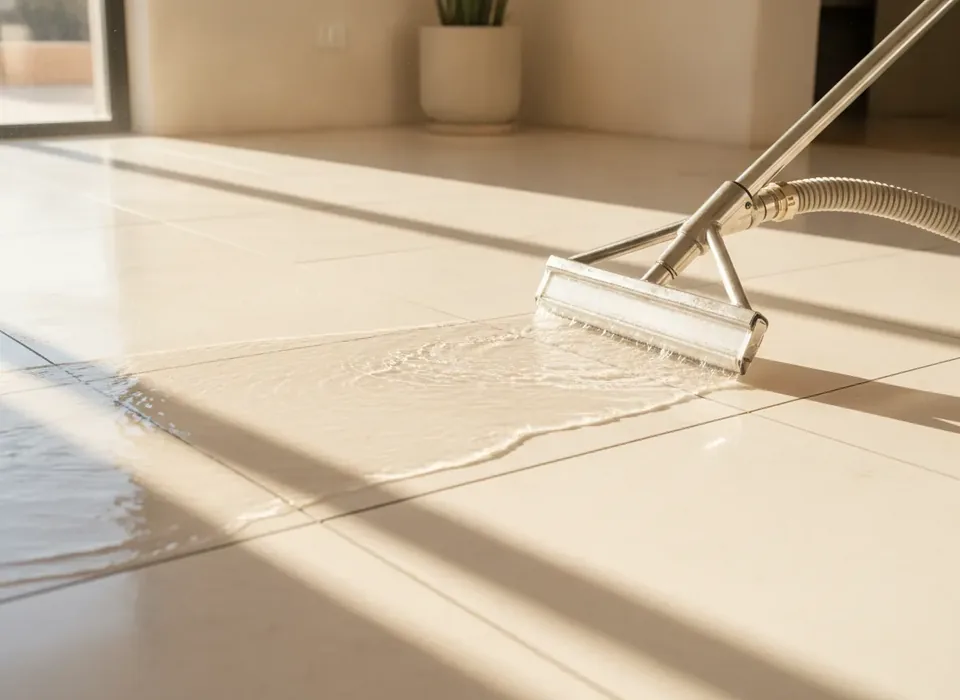
When the restoration company arrives, expect them to map moisture with meters, including in rooms that look dry, extract standing water, and remove wet carpet pad and any materials that can't be dried. They then set dehumidifiers and air movers and come back to take readings, usually daily. Our process page walks through each step, and the emergency water extraction page explains the first visit in more detail.
Ask for the moisture readings and a list of what was removed. That documentation supports your claim.
Why the clock matters in Arizona
Dry desert air can make a floor look dry long before the slab under it is. Concrete, drywall and insulation hold water you can't see or feel. During the monsoon (June 15 to September 30, per the National Weather Service), indoor humidity rises and drying slows. Mold can start in wet materials within about 24 to 48 hours, which is why a same-day start is worth so much. If you notice musty smells or growth later, see mold after water damage.
A note on asbestos before tear-out
If your home is older and wet drywall, texture or popcorn ceiling needs to come out, ask about asbestos. Maricopa County's Rule 370 requires an AHERA-certified inspection and 10 working days' notice for regulated renovations. A single owner-occupied home is exempt, but rentals may not be. In San Tan Valley, the Pinal County Air Quality Control District handles these rules. The contractor should know which applies.
After day one
Drying usually runs several days. Keep a simple log: when equipment ran, who visited, what they found. If your claim stalls, Arizona rule R20-6-801 requires insurers to acknowledge a claim within 10 working days. The full picture on costs is in the water damage restoration cost guide.
Frequently asked questions
What should I do first after water damage?
Stop the water by shutting the main or the fixture valve, then turn off power to any wet room if you can reach the breaker without standing in water. Keep people away from sagging ceilings. Then photograph everything before moving anything, and call a plumber if the source needs repair, a restoration company for extraction, and your insurer.
How soon should water damage be dried out?
As soon as possible, ideally starting the same day. Mold can begin growing in wet drywall, carpet pad and wood within about 24 to 48 hours. Fast extraction also limits how far water wicks into walls and cabinets, which keeps the job smaller and cheaper. Arizona's dry air helps but does not replace professional drying equipment.
Is it safe to stay in my home after water damage?
Often yes for a clean-water leak, if power to wet areas is off and no ceilings are sagging. Leave or keep away from affected areas if the water is sewage, if wet areas involve electrical hazards, or if anyone in the home has breathing problems. If you develop symptoms, see a doctor. Ask the restoration company about containment.
Should I call my insurance company or a restoration company first?
Stopping further damage comes first, so it is reasonable to call a restoration company for extraction and your insurer the same day. Arizona's DIFI advises making temporary repairs to prevent more damage and keeping receipts, but holding off on permanent repairs until the insurer has inspected. Document everything before work starts.